


06
By: Monica Harper
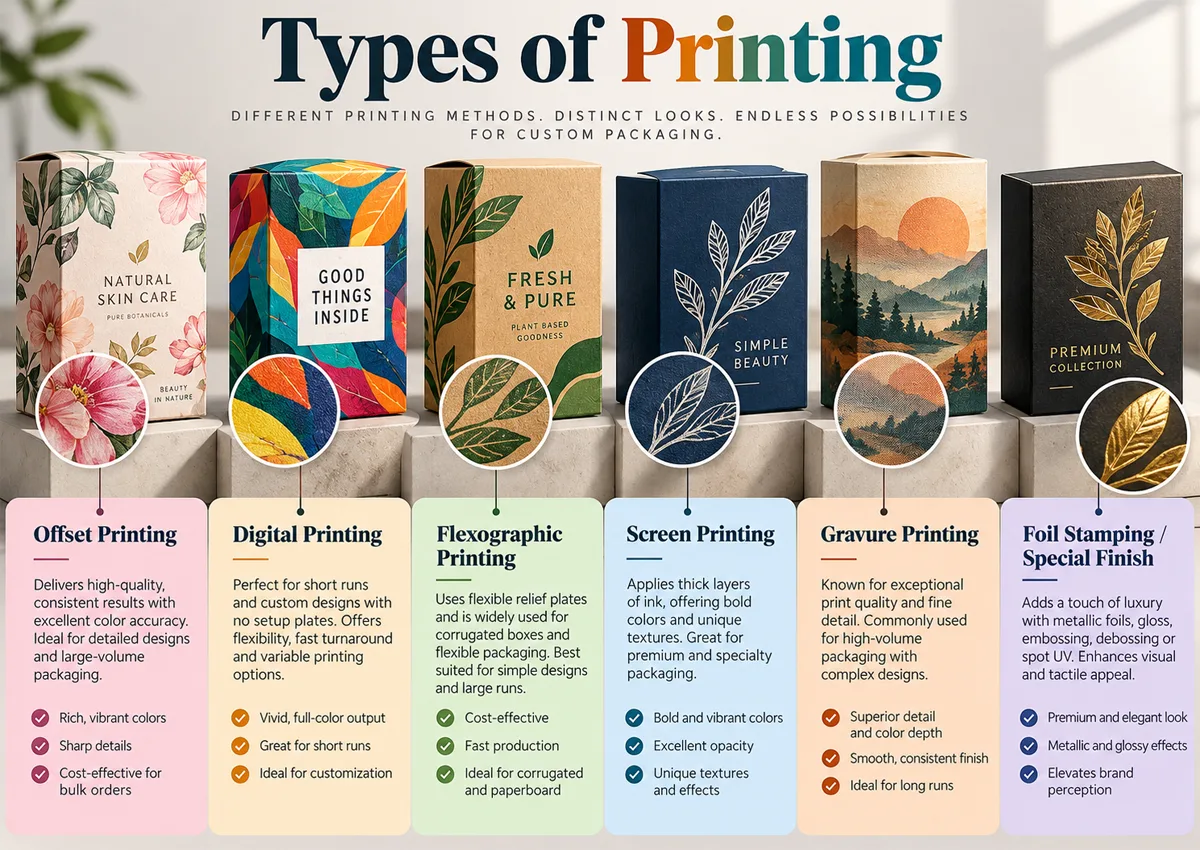
All packaging, magazines, shopping bags, product boxes and labels are almost entirely printed. There are advantages and disadvantages to each type of printing process. So the decision on which to use is usually driven by what you are printing, how many you want and what appearance you are aiming to achieve. This guide describes the types of printing processes, their benefits and disadvantages, and when to use them.
What Is Printing?
The definition of printing is simple. By applying ink and another colourant, multiple copies of images and text are created; this is called printing. You can create multiple copies accurately and quickly using printing techniques. In addition, prints are engraved on books, newspapers, labels, stickers, and packaging using a wide range of printing types, including digital etc.
How Does Print Work?
If you’ve ever thought about how printing works, the simple answer is: a design is transferred to a master image, which could be a plate, screen, cylinder, or digital file. Ink is applied to the master, then transferred to the surface. Once it is applied, it must dry, soak in, or be cured so it sticks to the surface.
The differences between printing methods lie in the composition of the master image, the way ink is transferred, and the method used to fix the ink. Moreover, these factors influence the cost, speed, colour, quality, and the types of materials suitable for printing.
Print Making
Printmaking is the artistic process of hand-creating prints using a matrix like a carved block, an engraved plate, a stone or a screen. You can use relief printing (linocut, woodcut), intaglio (etching), lithography, and screen printing to create custom printed product packaging. These techniques are perfect for producing limited editions of a single design.
Different Types of Printing Methods
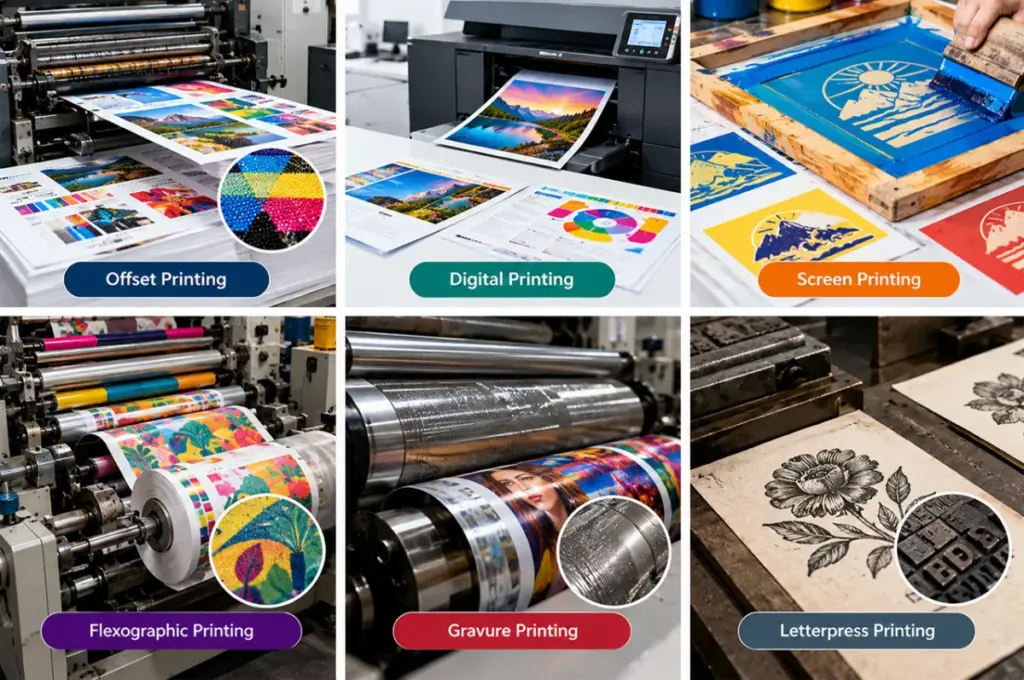
These are the main types of printing methods used today:
- Offset Printing
In this printing technique, ink is transferred from a metal plate to a rubber blanket and then to the material. It is the most famous method for mass printing. Hence, offset printing ensures colour accuracy across all wholesale orders and clarity of details.
- Digital Printing
The design is directly transferred from the computer file to the printer. There is no need for printing plates. It is perfect for short orders. Moreover, it is more expensive for high quantities. But setup costs are minimal.
- Gravure Printing
Images are carved onto a metal cylinder. This cylinder deposits the ink on the surface. Gravure offers consistent quality for extremely long print runs. But the cylinders are costly to produce.
- Flexographic Printing
In this technique, use plates to transfer ink onto the surface. It is one of the quickest printing processes for printing on different materials. Additionally, you can use flexography for high-volume applications. Such as cartons, labels, and bags.
- Screen Printing
The ink is pressed through the mesh stencil onto the surface. The ink in screen printing produces very thick, opaque colours and lends itself to textured or unusual surfaces. This printing process is the choice for packaging, signage, and promotional items.
- Letterpress Printing
The press applies ink to the surface, then presses it into the page to create an embossed appearance. Moreover, letterpress has an old-world, tactile quality and is a popular choice for luxury wedding invitations and stationery.
- UV Printing
This is cured instantly with UV light. UV printing is able to produce an extremely vibrant, durable image and can also print on non-absorbent or rigid materials.
Types of Box Printing
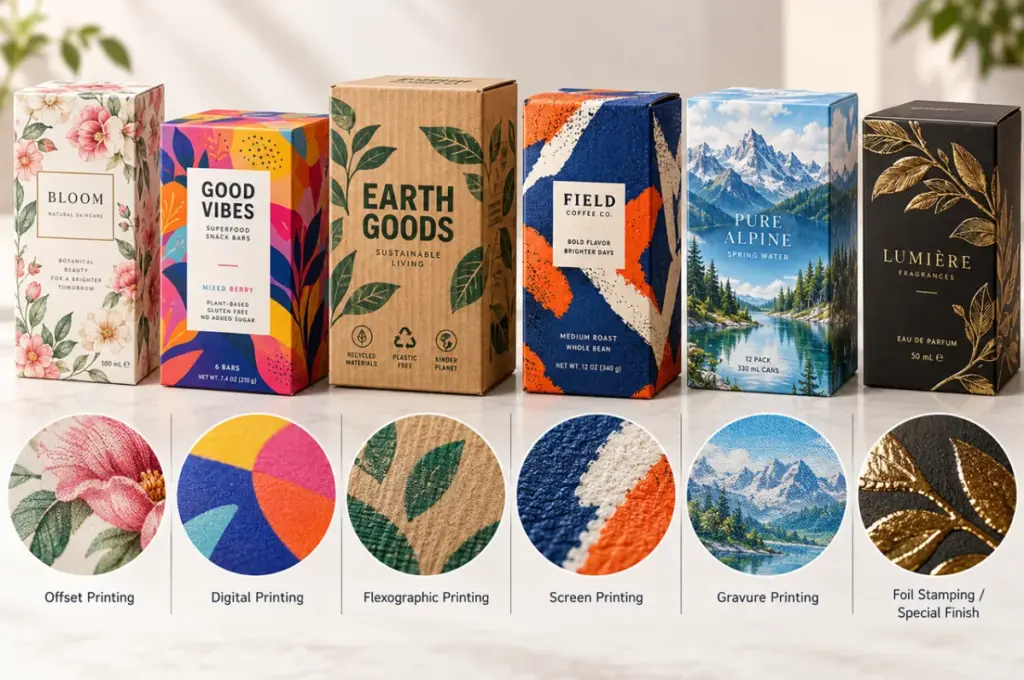
Here are the different types of box packaging printing:
Digital Box Printing
Ideal for short runs or frequently changing designs.
There is no need for plates in this technique. Additionally, get more versatility for startup or seasonal packaging.
Flexographic Box Printing
It is the cost-effective solution for large runs and simpler artwork.
In addition, it is perfect for shipping and mailer boxes.
Offset Box Printing
Perfect for retail printing packaging. Sellers go with offset box printing for their product displays.
This type of printing offers/provides high detail and accurate hues for your box.
Direct Box Printing
Ink is applied directly to the corrugated surface. It is perfect for building shipping cartons and display boxes.
Get excellent detail when printing on corrugated boxes, which gives this print a strikingly attractive look.
Paper Types for Printing
This paper or board printing also has an impact on how the result turns out:
- Coated paper is smooth and reflects ink on the surface for sharp images and bright colour. There are gloss, silk, and matte stock.
- Paper without coating is a little rougher, takes the ink more easily and appears more natural and softer. Great for more textual items and writing surfaces.
- Kraft paper: natural brown paper with a rustic feel for an environmentally conscious image.
- Cardstock paperboard: heavy paper that is stiffer and thicker than photo paper. Used to make boxes and tags.
- Recycled paper: made from recycled fibre. Suitable for sustainable products.
- White-coated (SBS) board: a clean white surface that delivers the best colour for premium packaging.
A fluted board for corrugated board is the fluted board for a packaging box for shipment; printing with the most advantage: flexo or litho lamination. To find out more about stock options, browse all our custom printing papers
Types of Labels for Printing
Labels have branding information about brands or products; common types are:
- Paper labels: cheap, easy to print, suitable for dry indoor conditions.
- Vinyl: hard and water-resistant great if you want to put something in the garden or outside.
- Kraft tags: the natural partner for handmade and eco-friendly products.
- See-through labels: a transparent film that gives bottles and jars the “no label” look.
- Thermal labels: for barcodes and shipping price tags.
- Hang tags: card hang tags with string on clothing and gifts.
Types of Sticker Printing
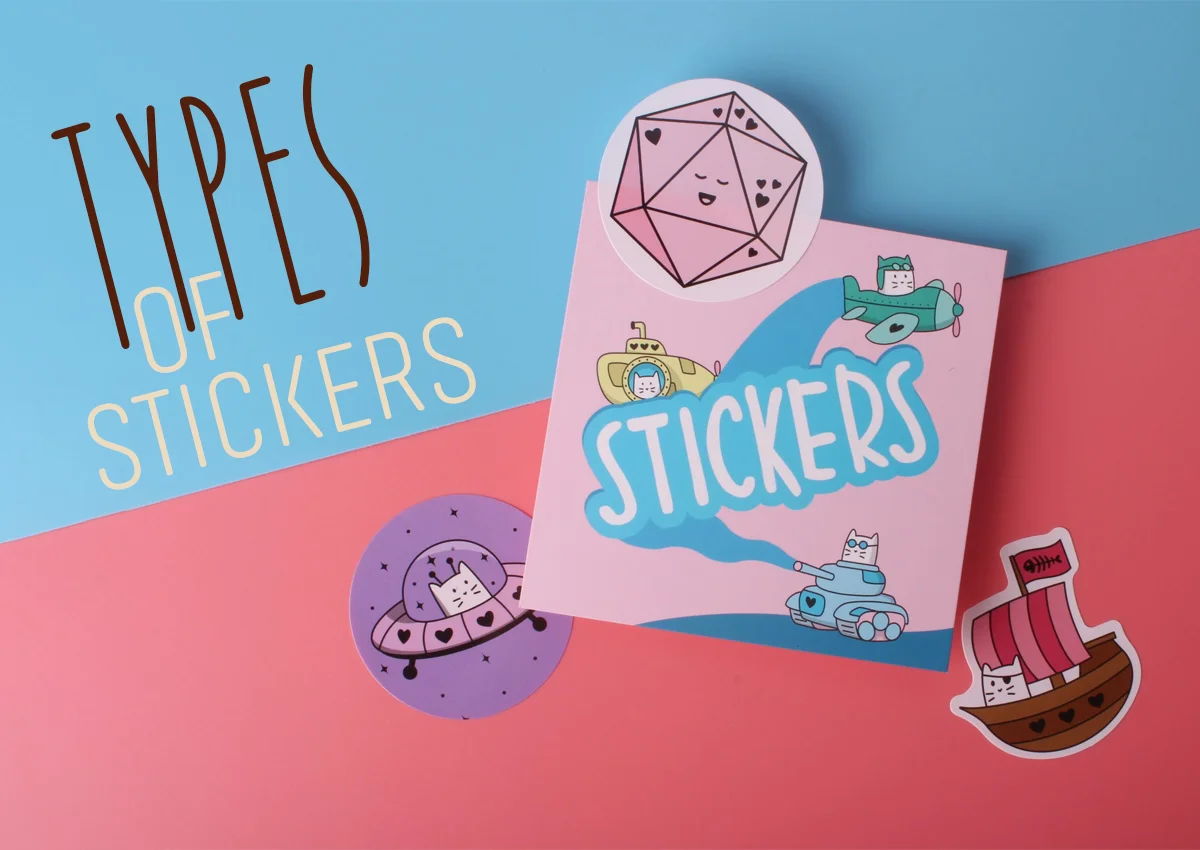
You can print your stickers in different ways according to your desired appearance.
| Digital Sticker Printing | Perfect for short runs. Use for custom designs. |
| Offset Sticker Printing | Ideal for large volumes. Get consistent colours. |
| Screen Sticker Printing | Offers striking colours/hues and waterproof prints. Use this for outside use. |
| Flexo Sticker Printing | An affordable and fast option for rolls of labels. |
| Die-cut Stickers | Cut to any shape or outline. |
How To Choose the Right Printing Method?
Use digital printing for small print runs. Use offset printing and flexo for high-volume work.
When selecting a printing process for packaging printing materials, select the most suitable printing process.
Photos can be photorealistic in digital or offset printing. Graphics are strong and simple using flexo and screen printing.
Printing digitally costs less. When printing larger quantities offset or flexography is cheaper.
Select foiling, embossing, and spot UV for additional printing effects too.
Printing Your Packaging with Packaging Bee AU
We offer different types of printing at Packaging Bee AU for custom box, label, or sticker printing. Our experts will help you in selecting the right the printing process that will work best for your packaging solutions. Moreover, we offer packaging printing in a variety of colours. Such as full-colour and single-sided printing. Contact us today to get an instant quote.
Wrapping-Up
Your desired design, material, order quantity and available budget are the main factors in choosing a printing technique. Digital printing is ideal for short runs, while go with offset and flexo printing for large-size printing orders. Therefore, from packaging printing to stickers and label printing, get in touch with us to get a professional brand image in the market!
FAQ's
-
What are the most common printing methods for packaging?
Standard techniques are digital, offset, flexo and screen printing. The most suitable method will depend on the packaging material, the design, order size and budget. -
Which printing method is best for small orders?
Digital printing is suited to small runs as it has less set-up and allows for easy printing of various print designs or for personalisation. -
What’s the difference between digital and offset printing?
Digital printing involves transferring artwork directly from a digital file, and offset printing uses plates. Digital is best for shorter runs, offset more so for bigger quantities. -
Can printing methods be used on boxes, labels, and stickers?
Yes. Many methods can be used across these products, but the right one depends on the material, surface, finish, and desired print quality.

 Delivery Time


