


12
By: Monica Harper
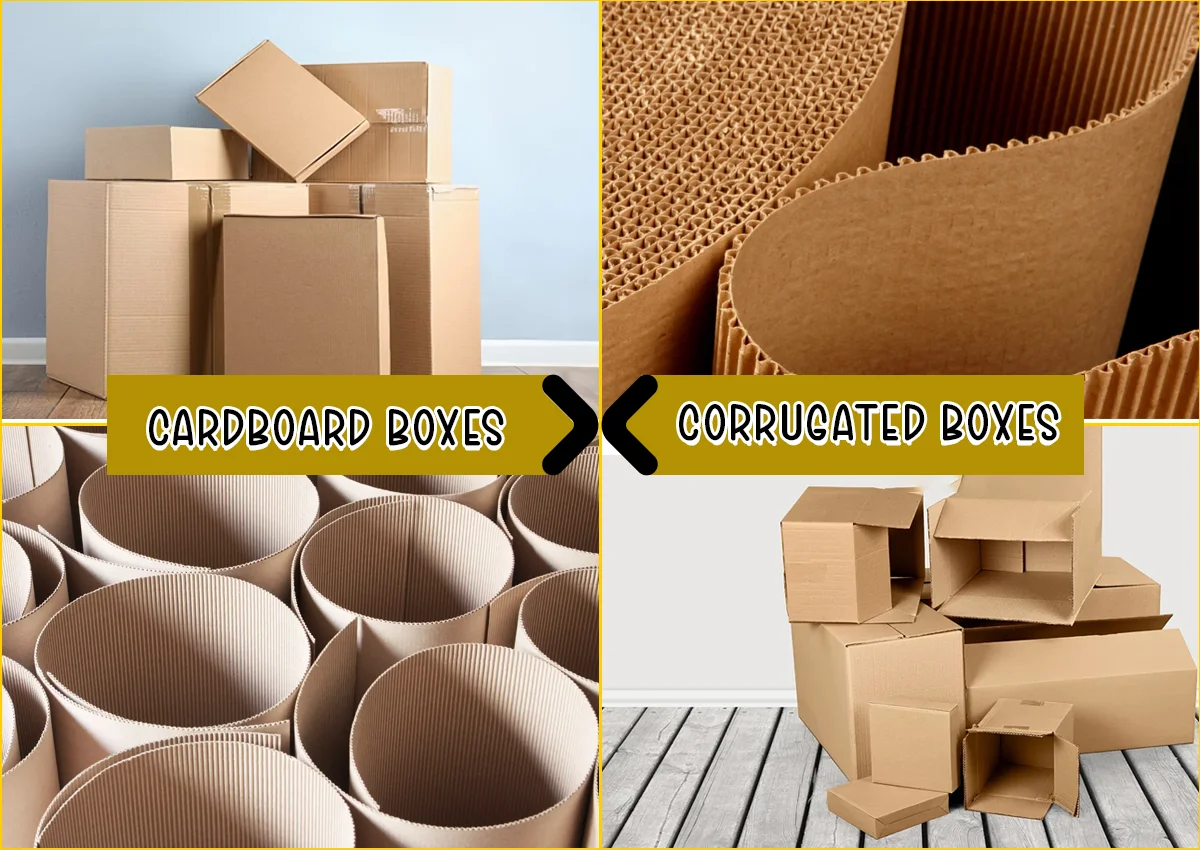
When you think about shipping boxes, cardboard is probably the first word that pops into your head. It is the most common packaging material that everyone prefers. But most of the shipping packages are crafted from corrugated material that is well-known for its strength. In this article, let’s delve into cardboard box vs corrugated box.
Cardboard boxes were the go-to option for shipping at one time, but they turned out to be unreliable. The shipping industry was completely altered with the introduction of corrugated boxes in 1856. These days, corrugated material is the most dominant choice and has become the backbone of the latest supply chain.
However, cardboard is still utilised, but you must understand which manufacturing material is the ideal choice for your product’s shipment. Here is the outstanding comparison between a cardboard box and a corrugated box. So, let’s get started!
What Are Cardboard Boxes?
Cardboard refers to a standard or straightforward term in packaging. Most unprofessional brands utilise cardboard for retail display packaging or heavy-duty shipping. Yet, professionals do not go with cardboard packaging boxes wholesale because they lack accuracy. It is not popular for shipping or transporting products nowadays.
Technically, it is also known as cardstock or paperboard. Made from a single layer of thick paperboard, it usually comes with a thickness of 0.010 to 0.030 inches. As a result, a cardboard box:
- It is sturdy enough to carry lightweight products. It is not suitable for heavy-duty shipping.
- It is used for the packaging of cosmetics, cereals, shoes, and frozen items.
- Get excellent prints and a bold visual appearance on these boxes.
- It is not working against moisture, crushing, and impacts.
What Are Corrugated Boxes?
The corrugated box made from corrugated fibreboard is the ideal option for getting a greater level of protection. In addition, it has a sturdy design that is best for heavy cargo. If you go with corrugated boxes, you can get durability, strength, and flexibility.
According to research, 95% of item shipments in North America are held in corrugated boxes because of their sturdiness. With multiple fluted layers, they work very well against pressure, punctures, impacts and other external factors. The flute types include A, B, C, and F flutes. Use two or more coverings to make your packaging stronger and safer. For example, B/C or A/B flutes.
It is totally up to you how much protection you might want. A single wall is best for light items; double wall offers maximum strength, while triple wall is best suited for transporting heavy products.
Performance & Functionality
When it comes to the functionality of packaging, the cardboard box vs corrugated box difference is explained in terms of protection, as well as their ability to hold items during shipping, handling, and storing.
Durability and Strength

When we talk about the durability and strength of a cardboard box vs a corrugated box, you can note a significant difference between these two types of packaging. Let’s delve into a quick breakdown of how they differ:
Cardboard is typically used to pack or ship lightweight products. Such as frozen food boxes, cereal boxes, and cosmetic boxes. These boxes can easily be torn, bent, or crushed during the transportation of items.
The notable disadvantage of cardboard box packaging is that if a moderate force is applied, it will collapse. Therefore, it is not suitable for longer shipments because there is a higher risk of damaging the product when it is transported.
Due to the construction of corrugated boxes Australia, they are well-designed to offer an extreme level of strength. The flutes of a corrugated box serve to secure the items from external factors, distribute weight evenly, and absorb shocks during shipping.
The significant advantage of a corrugated box is that it is ideal for shipping. Because it works very well against pressure and stacking. You can utilise this type of packaging for heavy load shipping because its robust design meets the edge crush test standard. The industrial standard corrugated packaging has a minimum of a 32 ECT rating, while stronger corrugated shipping containers can exceed the minimum of 90 ECT. Therefore, to get a safe shipping journey, it totally depends on the material of choice.
Shipping and Weight Efficiency
This difference will help you determine how much you will spend on shipping products and which choice is best:
Cardboard: A Weak Wrapping Solution for Shipping
- It is lightweight but has low structural integrity, which means shipping is overwhelmed.
- Furthermore, it is not a good choice for packaging heavy and fragile items.
- Offer a better shipping experience for individual packaging that will not be shipped for a long time.
- You can reduce shipping costs while using cardboard, but there is no guarantee of product safety.
Corrugated: Best Shipping Partner
- For the product’s shipping, corrugated is the best choice of packaging.
- It is 80% lighter but can provide extreme strength during delivery while lowering your shipping costs.
- In addition, you will save more on buying bulk orders of corrugated boxes.
Design Flexibility and Customisation
Cardboard: Versatile Packaging for Visual Appeal
- This type of cardboard packaging has a smooth surface for printing high-quality images to increase visual appeal. That’s why food and cosmetic brands highly prefer it.
- Produce a striking package with detailed graphics, gloss and matte lamination, embossing, foil stamping, and holographic finishing.
- Include a die-cut into your cardboard box, which is best for retail displays and special packaging.
- Use lamination on the outside of the shipping carton, giving some level of protection against environmental damage.
- The fragility of the structure does not allow for the inclusion of protective inserts within the carton.
Corrugated: Flexible Packaging for Retail and Logistics
- Die-cutting allows retailers and manufacturers to make interesting shapes and adds sophistication in the product presentation.
- Ship your fragile or delicate products safely by adding partitions and inserts, such as in tuck boxes.
- Apply water/chemical-resistant coatings and grease-resistant coatings for added durability to the finished corrugated box.
- Allow different flute sizes to develop the desired strength and printability. Get a visual printing on the E-flute. A C-flute comes with the highest stacking strength.
Sustainability and Green Solutions
Cardboard: High Recycling Rate
According to PCA, cardboard is the most recycled packaging material. Cardboard recycling may be difficult when adding coatings, food residues, or laminates.
Corrugated: Lower Carbon Footprint Leader
But corrugated is 50% recyclable. Therefore, each corrugated container has a smaller environmental footprint.
Wrapping-Up
In short, a corrugated box offers strength, visibility, and sustainability. That’s why the modern packaging solution is improvised packaging. Cardboard is ideal for lighter items that need quality visuals. But it totally depends on you which packaging solution you choose, according to the brand or product needs.
Contact Packaging Bee AU and achieve premium cardboard and corrugated boxes for your next packaging project.
FAQ's
-
What type of box would work best for the shipping of heavy or fragile items?
Corrugated boxes are the best choice when dealing with heavy or fragile items due to their better strength and shock absorption qualities. -
Are cardboard and corrugated boxes good for the environment?
Yes! Both types of boxes are environmentally friendly because they can be recycled. Cardboard typically has a much higher recycling rate than corrugated boxes. -
Can I brand cardboard boxes and corrugated boxes?
Yes! You can customise both cardboard boxes and corrugated boxes with printing, different shapes, and coatings for branding purposes. -
What are some major differences in how durable cardboard and corrugated boxes are?
Cardboard boxes do not offer as much durability as corrugated boxes; therefore, they have the potential to be more damaged than corrugated boxes, which have superior strength and durability.




 Delivery Time


